
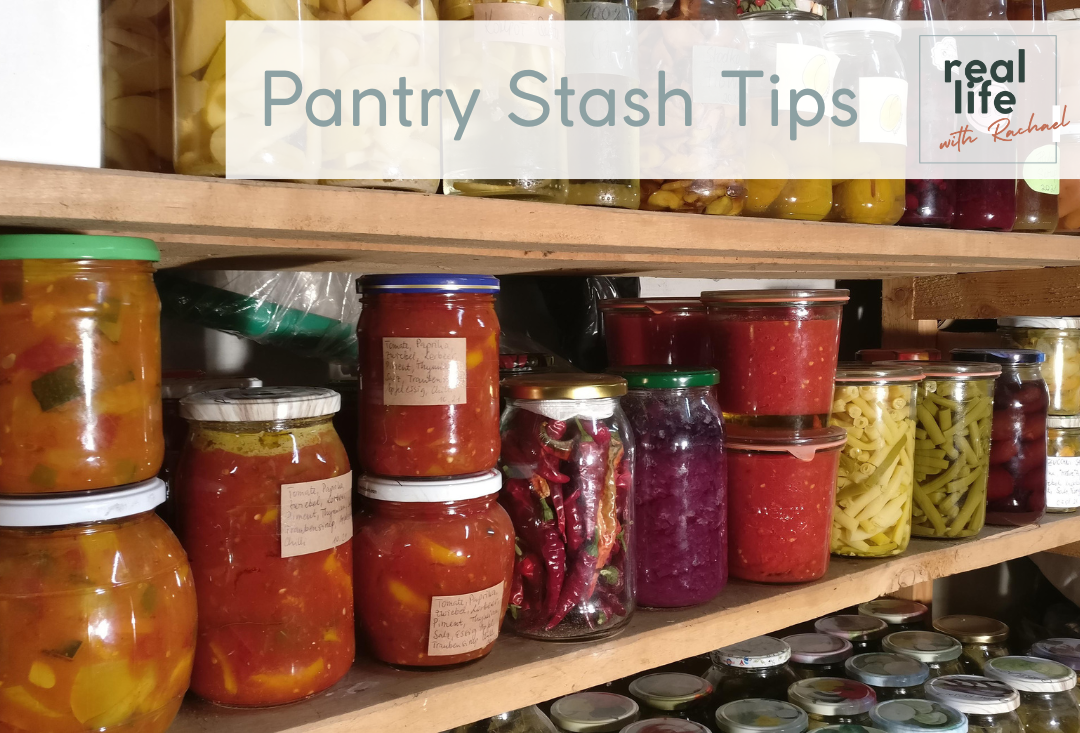
A few weeks ago, I went through my whole freezer stashing method as a means of saving money and being prepared in the event of a disaster. But now I want to talk about something even more practical – the well stocked pantry. Most people don’t have an extra chest freezer, and if your fridge is like mine, you have very limited freezer space in general. And while many people also don’t have a dedicated pantry (team long tall cabinet going on 20+ years!), the nature of shelf stable items is that they can be stored nearly anywhere. That means a part of a coat closet, a guest room closet, heck even under the bed! In our case, we have a garage with some room at the back that I have turned into an overflow pantry. This is also where the deep freezer is. It works well because it’s close to the kitchen and relatively temperature controlled since it’s attached to the house.
Tip #1 Store What You Use
This seems obvious, but it still needs to be said. There are plenty of foods out there that are marketed as disaster foods, even freeze dried food buckets that keep for 20 years. In my opinion, this is not the best way to actually keep a well stocked pantry for both money saving benefits AND disaster prep. There’s no need to buy fancy freeze dried foods, MREs, or even anything new. You simply need to buy extra of what you already eat. This serves a few purposes, not least of which is the fact that you know you already like it. Who wants to be without power, warming up some mystery food on the camp grill and risking it not agreeing with your stomach? Do you want to be in survival mode and barfing? Methinks not. This is not the time to try something new.
Think about storing extra (look for BOGOs!):
- Canned beans (a few of each variety you like)
- Canned vegetables (only ones you actually use/like – for us that’s tomatoes, corn, maybe a green bean)
- Sauces (marinara, curries)
- Soups
- Pre-cooked proteins like canned chicken and tuna
- Peanut Butter and jelly
- Pasta
- Spice packs (taco, chili, etc) and spices
- Canned fruit
- Rice (we have both dry and those pre-cooked packs)
- Cornmeal/Cornbread Mix/Polenta/Grits
Tip #2 Rotate Through Your Stock
Once you’ve stocked up on your favorites, the next trick is to actually use them and replace them as you do. Put newer items in the back, and use from the front first. This is key because believe it or not, most of these items do actually expire. And do you really want to be testing that during an emergency? Again, methinks not.
Tip #3 Shop Your Pantry First
This one requires your pantry to be semi-organized, so I recommend spending some time and energy setting it up to be easy to use and find things. But, it does not have to look like a Pinterest pantry! To make sure you are using your stock, plan 1-2 meals a week that feature the items you’re stashing. Whether it’s a couple cans of tomatoes and beans for a chili or using a jar of pre-made curry sauce for some chicken and serving it with rice, shop your pantry first. Better yet, also hit up your freezer to check for forgotten packs of meat or bags of vegetables. It sounds easy, but I have found personally that this is harder than it seems. When thinking about meal planning it’s easy to scroll Pinterest or IG to find new and exciting recipes each week that require you to purchase every single ingredient. Resist doing this for all of your meals! It will save you a lot of money (and waste in expired canned goods) to prioritize your pantry and freezer stash when meal planning.
Tip #4 Keep Inventory
This one falls in the category of do as I say not as I do. Just ask the 4 jars of cumin I currently have stowed away in a drawer waiting for their time to shine. We all have that one ingredient we’re sure we’re out of and panic buy at the store, yes? For awhile, it was cinnamon. The best way to prevent this is to keep some form of inventory. Ideally it would be something you could access on your phone while shopping, or at least a list you could check before you head out. I’m not organized or detail oriented enough to execute this. But, I bet some of you are. Typically what I try to do is make my grocery list from the recipes I’m planning, and then go and physically locate anything I might already have so I don’t re-buy it. And that’s honestly the best I can probably do at this time in my life.
Tip #5 Don’t Go Too Hard
It takes time, money, and effort to build up a pantry stash – so there’s no rush. Many of us are lacking in resources in any or all of those categories right now. This isn’t an all or nothing activity. If you don’t have the capacity (or money) to go from zero to hero in the pantry stash department, don’t worry. You can start small. In fact, I recommend you do. Maybe it’s an extra can of diced tomatoes at the store this week or a BOGO on pasta. Even this will help your future self!
Ultimately the goal with pantry stashing is to slowly build a back stock of items you use regularly to not only save time/money, but also allow you to be prepared for an event where you may not have quick access to fresh food. If this is something you might find helpful, I encourage you to start – however small. And, I hope these tips make it more approachable and not so daunting. Happy stashing!